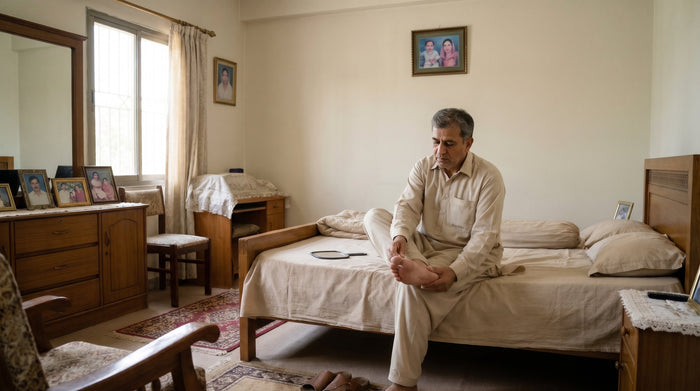
For people with diabetes, a few minutes of foot care each day can prevent serious problems. Because about half of people with diabetes have some nerve damage, small injuries can go unnoticed.1 This simple daily checklist helps you catch problems early.
QUICK ANSWER
Check your feet every day, wash them in warm (not hot) water, dry well, moisturise (but not between the toes), never walk barefoot, wear well-fitting shoes with socks, cut nails straight across and get your feet examined regularly.1 See a doctor promptly for any sore, blister or change that doesn't heal.
Your daily foot care checklist
- Look at your feet every day, including the soles and between the toes. Use a mirror or ask a family member to help.1
- Wash in warm water, not hot, and don't soak your feet.1
- Dry completely, especially between the toes.1
- Moisturise the tops and soles, but not between the toes.1
- Never walk barefoot, even at home or in the mosque courtyard. Wear soft socks, shoes or slippers.1
- Shake out your shoes and check the lining before wearing them.1
- Raise your feet when sitting and wiggle your toes a few times a day to help blood flow.1
Weekly and regular care
- Trim toenails straight across and smooth the edges with a file.1
- Don't cut corns or calluses yourself, or use chemical removers.1
- Buy shoes later in the day, when feet are largest, and break new shoes in slowly.1
- Have your feet checked at every diabetes visit and get a full foot exam at least once a year.1,2
LOCAL TIPS
Avoid hot water bottles, heaters or hot sand on numb feet, as burns can happen without you noticing. During wudu, dry carefully between the toes. In summer, avoid open sandals on hot roads if your feet are numb.
Warning signs: see a doctor promptly
- Cuts, blisters, sores or ulcers, or an infected corn or ingrown toenail1
- Redness, swelling, or a change in colour or temperature1
- Tingling, burning, pain or loss of feeling1
- Changes in foot shape1
- Pain in the legs when walking1
- Thick yellow toenails or athlete's foot between the toes1
READ OUR FULL GUIDE
Diabetic Neuropathy: Early Signs and How to Manage It Day to Day →
Our quick guide to nerve damage in diabetes.
Common questions
Can I walk barefoot at home?
It's safest not to. Soft slippers protect numb feet from cuts and burns you might not feel.1
What exercise is best for diabetic feet?
Walking, cycling and swimming are good options. Ask your doctor which activities suit you, especially if you have nerve damage or foot problems.1
THE BOTTOM LINE
A few minutes a day protects your feet: check them, wash and dry carefully, moisturise, never go barefoot, wear good shoes and get regular foot exams. Act quickly on any sore or change that doesn't heal.
This article is for general information only and is not medical advice. Always speak to your doctor about your own health.