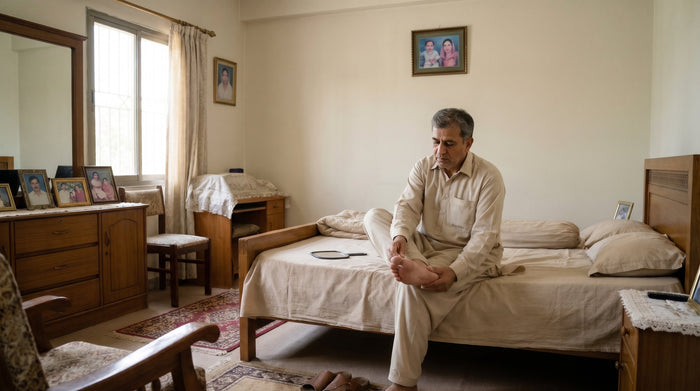
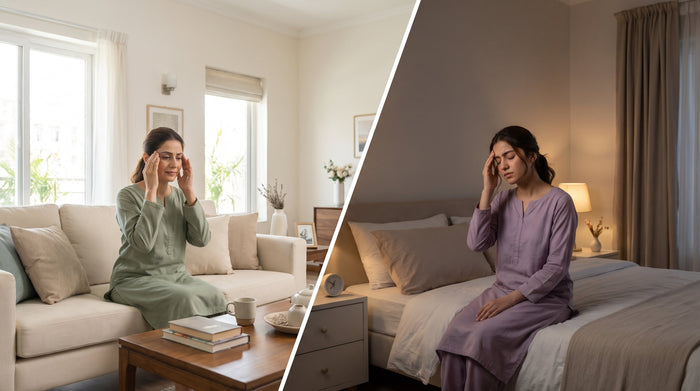
Lights off, eyes closed, and then the mind starts racing: tomorrow's work, unpaid bills, one more scroll through the phone. Late dinners, a cup of chai after Isha, hot summer nights and screens in bed make it even harder to switch off. If you often lie awake or wake up tired, you are far from alone.
In this guide, we explain in simple words how much sleep you really need, what keeps people awake, the habits that help most, what research honestly says about calming nutrients and botanicals, and when poor sleep needs a doctor.
KEY TAKEAWAYS
- Most adults need about 7 to 9 hours of sleep a night.1
- Stress, caffeine, noise, heat and screens are among the most common reasons people can't sleep.1
- Changing sleep habits is the most effective first step for most people.1
- Sleep problems lasting months, loud snoring or heavy daytime sleepiness need a doctor.1
1. Why good sleep matters
Sleep is when your body and brain recharge. During deep sleep, the body repairs itself, and during dreaming sleep, the brain sorts memories and emotions. After a poor night, most people notice it straight away: low energy, a short temper, poor concentration and cravings for sugary snacks.
Your sleep is guided by an internal body clock. It responds to light and darkness: daylight tells the brain to stay alert, while darkness in the evening signals the body to release melatonin, the hormone that helps you feel sleepy. Bright screens late at night can confuse this clock.
2. What keeps people awake
| SLEEP STEALER | WHAT HELPS |
|---|---|
| Stress and worry | A wind-down routine, writing tomorrow's to-do list before bed |
| Chai, coffee, cola late in the day | No caffeine for 6 hours before bed |
| Phones and screens in bed | Screens off 30 to 60 minutes before sleep |
| Heavy, late dinners | Eat 2 to 3 hours before bed, keep it light |
| Heat, noise, light | A cool, dark, quiet room; earplugs or an eye mask |
| Irregular sleep times | The same bedtime and wake time, even on weekends |
| Smoking and nicotine | Avoid in the evening, ideally quit |
Health conditions such as anxiety, depression, an overactive thyroid, chronic pain, restless legs and sleep apnoea, as well as some medicines, can also disturb sleep.1
3. 8 habits for better sleep
- Keep a regular schedule: go to bed and wake up at the same time every day.
- Get morning daylight for 15 to 30 minutes to set your body clock.
- Cut caffeine after mid-afternoon, including strong chai and cola.
- Build a wind-down routine: a warm shower, light reading, prayer or slow breathing.
- Put the phone away or out of reach 30 to 60 minutes before bed.
- Make your room cool, dark and quiet.
- Move during the day, but finish intense exercise a few hours before bed.
- If you can't sleep after about 20 minutes, get up, do something calm in dim light, and return when sleepy.
4. Calming nutrients and botanicals: an honest look
Many people look for natural support alongside better habits. Here is what is known about the ingredients most often used for relaxation, including where the evidence is still limited.
L-THEANINE
An amino acid found naturally in tea leaves. It is the reason a cup of tea can feel both calming and alert. It is widely used to support relaxation without heavy drowsiness.
CHAMOMILE
A gentle daisy-like flower traditionally enjoyed as a bedtime tea. Early research suggests it may help with feelings of anxiety, though studies on sleep are still very limited. People allergic to ragweed, daisies or marigolds should avoid it.2
RED REISHI
Ganoderma mushroom
A mushroom used for centuries in East Asian tradition to support calm and restful sleep, and described as an "adaptogen" that helps the body cope with stress. Modern research is still developing. It may affect blood clotting, blood pressure and blood sugar.
VITAMINS B6 AND B12
Vitamin B6 helps the body make serotonin and melatonin, the brain messengers involved in mood and sleep. Vitamin B12 supports normal nerve function and helps reduce tiredness.3
GOOD TO KNOW
Sleeping pills are rarely recommended long term, and pharmacy sleep aids can leave you drowsy the next day.1 For lasting improvement, good habits come first, and any supplement works best alongside them.
5. When to see a doctor
SEE A DOCTOR IF
You have had trouble sleeping for months, changing your habits hasn't helped, or poor sleep makes it hard to cope with daily life.1 Also see a doctor if you snore loudly, stop breathing or gasp during sleep, or feel very sleepy during the day, as these can be signs of sleep apnoea. Doctors can offer proven help such as cognitive behavioural therapy for insomnia (CBT-I).
6. How SLEEP NOW can help
SLEEP NOW brings Red Reishi, L-Theanine and Chamomile together with vitamins B6 and B12 in one melatonin-free capsule, to support calm, relaxation and a restful night as part of a regular bedtime routine.
EACH SLEEP NOW CAPSULE CONTAINS
| Red Reishi mushroom extract | 300 mg |
| L-Theanine | 80 mg |
| Chamomile extract | 45 mg |
| Vitamin B6 | 20 mg |
| Vitamin B12 | 5 mcg |
Adults: 1 capsule 30 to 60 minutes before bedtime. Melatonin-free. Avoid driving or operating machinery if you feel drowsy.
7. Common questions
Will I feel groggy the next morning?
SLEEP NOW is melatonin-free and uses gentle botanicals, so most people do not expect a heavy morning feeling. Everyone responds differently, so avoid driving until you know how it affects you.
Can I take it with my medicines?
Check with your doctor first, especially if you take sleeping pills, sedatives, antidepressants, blood thinners such as warfarin, or medicines for blood pressure or diabetes. Reishi and chamomile can interact with some of these.2
Who should avoid it?
Women who are pregnant or breastfeeding (unless a doctor advises it), people allergic to chamomile, ragweed, daisies or marigolds, and people with bleeding disorders or low blood pressure without medical advice. Stop before planned surgery.
Can SLEEP NOW replace my medicine?
No. It supports relaxation and healthy sleep but does not treat sleep disorders. If poor sleep lasts for months or comes with loud snoring or daytime sleepiness, see a doctor.
THE BOTTOM LINE
Most adults need 7 to 9 hours of sleep, and better habits are the strongest tool for getting it: a steady schedule, morning light, less late caffeine and fewer screens in bed. Calming botanicals and B vitamins can support relaxation alongside these habits. See a doctor if sleep problems last for months or come with loud snoring or heavy daytime sleepiness.
This article is for general information only and is not medical advice. SLEEP NOW is a food supplement and is not intended to diagnose, treat, cure or prevent any disease. Consult your doctor before use if you are pregnant, breastfeeding, taking medication or have a medical condition.